
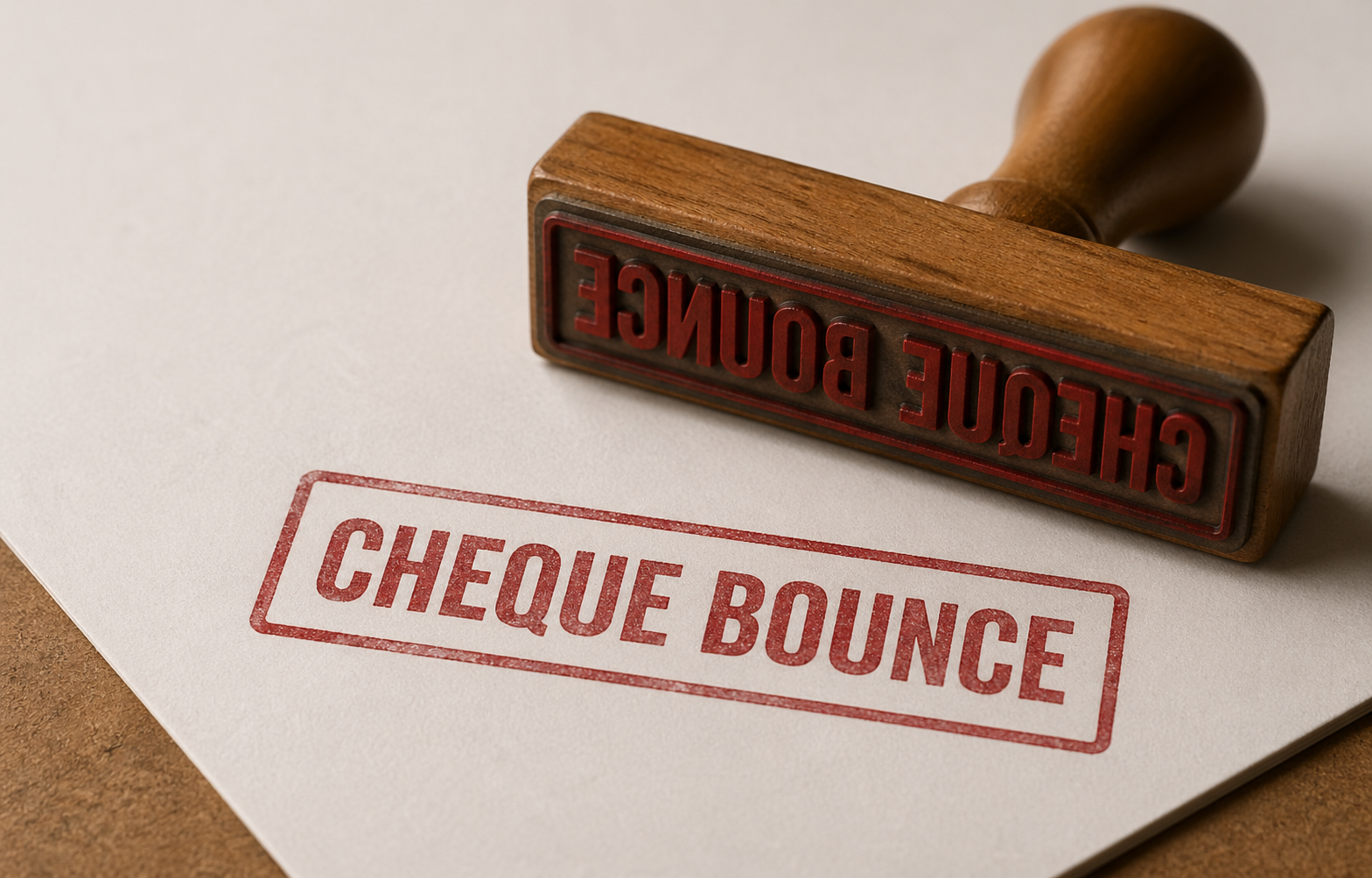
Cheque bounce is one of the most common financial and legal issues faced by individuals and businesses in India. It occurs when a cheque presented to the bank for payment is dishonoured or returned unpaid due to insufficient funds or other valid reasons. Cheque bounce cases are serious because they affect trust in financial transactions and can lead to legal consequences under Indian law.
The legal framework for cheque bounce cases is primarily governed by the Negotiable Instruments Act, 1881, especially Section 138, which deals with dishonour of cheques due to insufficiency of funds. This law provides both civil and criminal remedies to the aggrieved party.
What is Cheque Bounce
Cheque bounce means the failure of a cheque to be cleared by the bank. When the payee deposits the cheque and the bank refuses payment, it is returned with a memo stating the reason for dishonour.
The most common reason is insufficient balance in the drawer’s account. However, other reasons such as signature mismatch, overwriting, account closure, stale cheque, or stop payment instructions can also result in cheque dishonour.
A bounced cheque not only damages business credibility but may also result in legal notices, court cases, and financial penalties.
Common Reasons for Cheque Bounce
Insufficient funds is the most frequent reason. If the account holder does not have enough money to cover the cheque amount, the bank returns it unpaid.
Signature mismatch occurs when the signature on the cheque does not match the specimen signature available with the bank.
Post-dated or stale cheques may also bounce. A stale cheque is one presented after its validity period, usually three months from the date of issue.
Overwriting without proper authentication can make a cheque invalid. Similarly, if the account has been closed before the cheque is presented, the cheque will be dishonoured.
Stop payment instructions given by the drawer to the bank can also lead to cheque bounce, though legal liability may still arise depending on circumstances.
Legal Provision Under Section 138
Section 138 of the Negotiable Instruments Act, 1881 makes cheque bounce a criminal offence if the cheque is returned due to insufficient funds or if it exceeds the amount arranged with the bank.
For legal action to arise, certain conditions must be fulfilled. The cheque must be issued for the discharge of a legally enforceable debt or liability. It must be presented within its validity period. The payee must send a legal demand notice within thirty days of receiving the bank’s dishonour memo.
If the drawer fails to make payment within fifteen days of receiving the notice, the payee can file a criminal complaint in court.
Punishment for Cheque Bounce
Cheque bounce is punishable with imprisonment for up to two years, or a fine which may extend to twice the amount of the cheque, or both.
Courts may also direct compensation to the complainant. The seriousness of punishment depends on the facts of the case, the conduct of the accused, and whether the matter is settled during proceedings.
In many cases, courts encourage settlement to reduce litigation and ensure faster recovery.
Procedure for Filing a Cheque Bounce Case
The first step is receiving the cheque return memo from the bank stating the reason for dishonour.
The payee must then send a legal notice to the drawer within thirty days. This notice demands payment of the cheque amount within fifteen days.
If the drawer fails to pay within the notice period, the complainant can file a complaint before the appropriate magistrate court within thirty days after the expiry of the notice period.
The court examines the complaint and evidence, issues summons to the accused, and conducts the trial. Both parties get an opportunity to present their case.
Evidence may include the original cheque, bank return memo, legal notice, postal receipts, and proof of liability.
Civil and Criminal Remedies
Cheque bounce cases can involve both civil and criminal remedies.
Criminal remedy arises under Section 138 of the Negotiable Instruments Act, 1881 and aims to punish the wrongdoer.
Civil remedy focuses on recovery of money through a recovery suit or summary suit under the Code of Civil Procedure, 1908.
Many complainants pursue both remedies simultaneously to ensure both punishment and financial recovery.
Defenses Available to the Accused
The accused may defend the case by proving that the cheque was not issued for a legally enforceable debt. For example, if it was issued as a gift, security, or without consideration, criminal liability may not arise.
Another defense may be that the legal notice was not properly served or the cheque was altered without authority.
The accused may also challenge the complainant’s evidence or prove that payment was already made.
Courts examine all facts carefully before deciding guilt.
Business Impact of Cheque Bounce
For businesses, cheque bounce can lead to financial instability and damaged professional relationships. Delayed payments affect cash flow and operational efficiency.
Repeated dishonour of cheques can also harm reputation and reduce trust among clients, vendors, and financial institutions.
Proper documentation, written agreements, and financial due diligence help reduce such risks.
Preventive Measures
To avoid cheque bounce issues, both parties should ensure clarity in financial transactions.
The drawer should maintain sufficient balance before issuing a cheque and verify all details including date, amount, and signature.
The payee should deposit the cheque within its validity period and maintain records of transactions.
Using digital payments and bank transfers can also reduce dependence on cheques and minimize legal disputes.
Businesses should adopt proper credit policies and verify customer credibility before accepting post-dated cheques.
Recent Importance of Cheque Bounce Law
Even in the digital payment era, cheques remain important for business transactions, loan repayments, and contractual obligations. Therefore, cheque bounce laws continue to play a major role in protecting financial discipline.
Courts have also emphasized speedy disposal of cheque bounce cases to reduce backlog and strengthen commercial confidence.
Conclusion
Cheque bounce is not merely a banking issue but a serious legal matter with significant financial and criminal consequences. The Negotiable Instruments Act, 1881 provides strong legal protection to payees and ensures accountability in financial dealings.
Understanding the procedure, rights, and remedies helps individuals and businesses handle cheque dishonour cases effectively. Timely legal action, proper documentation, and financial discipline are essential to prevent disputes and protect interests.