
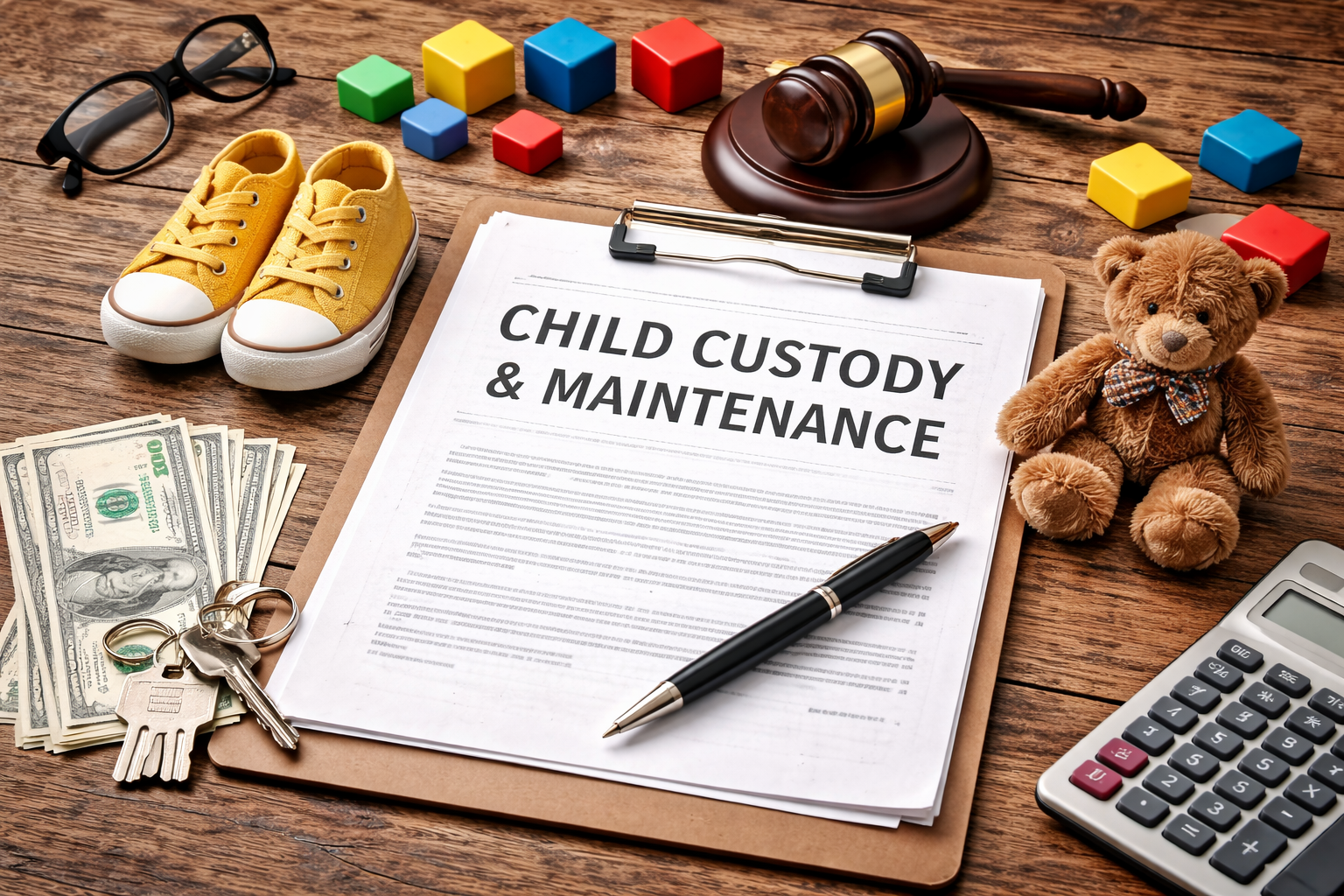
Child custody and maintenance are two of the most critical aspects of family law, especially during divorce or separation. These issues directly impact the future, well-being, and stability of a child. Indian courts always prioritize the “best interest of the child” while deciding custody and financial support matters. Understanding the legal framework helps parents make informed and responsible decisions.
What is Child Custody?
Child custody refers to the legal right given to a parent (or guardian) to take care of a child’s upbringing, education, health, and overall welfare. Custody is not just about where the child lives, but also who makes important life decisions for the child.
In India, custody laws are governed by statutes like the Hindu Minority and Guardianship Act, Guardians and Wards Act, and personal laws applicable to different religions.
Types of Child Custody in India
1. Physical Custody
In this arrangement, the child lives with one parent, while the other parent is granted visitation rights. The custodial parent is responsible for day-to-day care.
2. Joint Custody
Both parents share custody of the child. The child spends time with each parent according to a schedule. This ensures the child maintains a strong relationship with both parents.
3. Legal Custody
Legal custody allows a parent to make major decisions regarding the child’s education, health, and welfare. Courts may grant legal custody to one or both parents.
4. Sole Custody
In certain cases, one parent is granted complete custody due to the other parent’s incapability, abuse, or neglect.
5. Third-Party Custody
If both parents are unfit, custody may be given to a relative or guardian.
Factors Considered by Courts in Custody Cases
Indian courts focus primarily on the welfare of the child rather than the rights of parents. Key factors include:
- Age and gender of the child
- Emotional and physical needs
- Financial stability of parents
- Education and upbringing
- Parent-child bonding
- Mental and physical health of parents
- Child’s preference (if mature enough)
For younger children, especially below 5 years, custody is usually granted to the mother unless there are exceptional circumstances.
What is Maintenance?
Maintenance refers to the financial support provided by one parent (usually the non-custodial parent) for the upbringing and welfare of the child. It ensures that the child continues to live a comfortable and secure life even after separation.
Maintenance is a legal obligation and can be claimed under laws such as Section 125 of CrPC, Hindu Marriage Act, and other personal laws.
Types of Maintenance
1. Interim Maintenance
This is temporary financial support given during the pendency of the case.
2. Permanent Maintenance
This is granted after the final judgment and continues until the child becomes self-sufficient.
Factors Affecting Maintenance Amount
The court determines maintenance based on several factors:
- Income and financial status of both parents
- Standard of living before separation
- Educational and medical needs of the child
- Number of dependents
- Lifestyle and background of the family
There is no fixed formula, and the amount varies from case to case.
Who Can Claim Maintenance?
- Minor children
- Adult children (if physically or mentally challenged)
- In some cases, unmarried daughters
The custodial parent usually files the maintenance claim on behalf of the child.
Rights of the Custodial Parent
- Right to receive maintenance for the child
- Authority to make day-to-day decisions
- Right to seek legal protection for the child
- Ability to request modification of custody or maintenance
Rights of the Non-Custodial Parent
- Right to visitation
- Right to participate in major decisions (in joint custody)
- Right to seek custody modification
- Protection against misuse of maintenance claims
Visitation Rights
Even if one parent does not have custody, they are generally granted visitation rights to maintain a healthy relationship with the child. Courts may decide:
- Weekly or monthly visits
- Holiday custody
- Video call access
In cases involving conflict, supervised visitation may be ordered.
Modification of Custody and Maintenance
Custody and maintenance orders are not permanent and can be modified if there is a significant change in circumstances such as:
- Change in income
- Relocation of a parent
- Child’s preference
- Misconduct or neglect
Importance of Mediation
Family courts often encourage mediation to resolve disputes amicably. It helps:
- Reduce legal costs
- Avoid emotional stress
- Maintain a cooperative parenting environment
Challenges in Custody and Maintenance Cases
- लंबी कानूनी प्रक्रिया
- Emotional stress for child and parents
- Financial burden
- Misuse of legal provisions in some cases
- Difficulty in enforcement of orders
Tips for Parents
- Always prioritize the child’s well-being
- Avoid involving children in disputes
- Maintain clear financial records
- Follow court orders strictly
- Seek legal and emotional support when needed
Conclusion
Child custody and maintenance are sensitive legal matters that require careful handling. Indian courts aim to ensure that the child’s future remains secure and stable despite the breakdown of a marriage. A balanced approach, mutual understanding, and proper legal guidance can help both parents navigate this challenging phase effectively while protecting the child’s best interests.