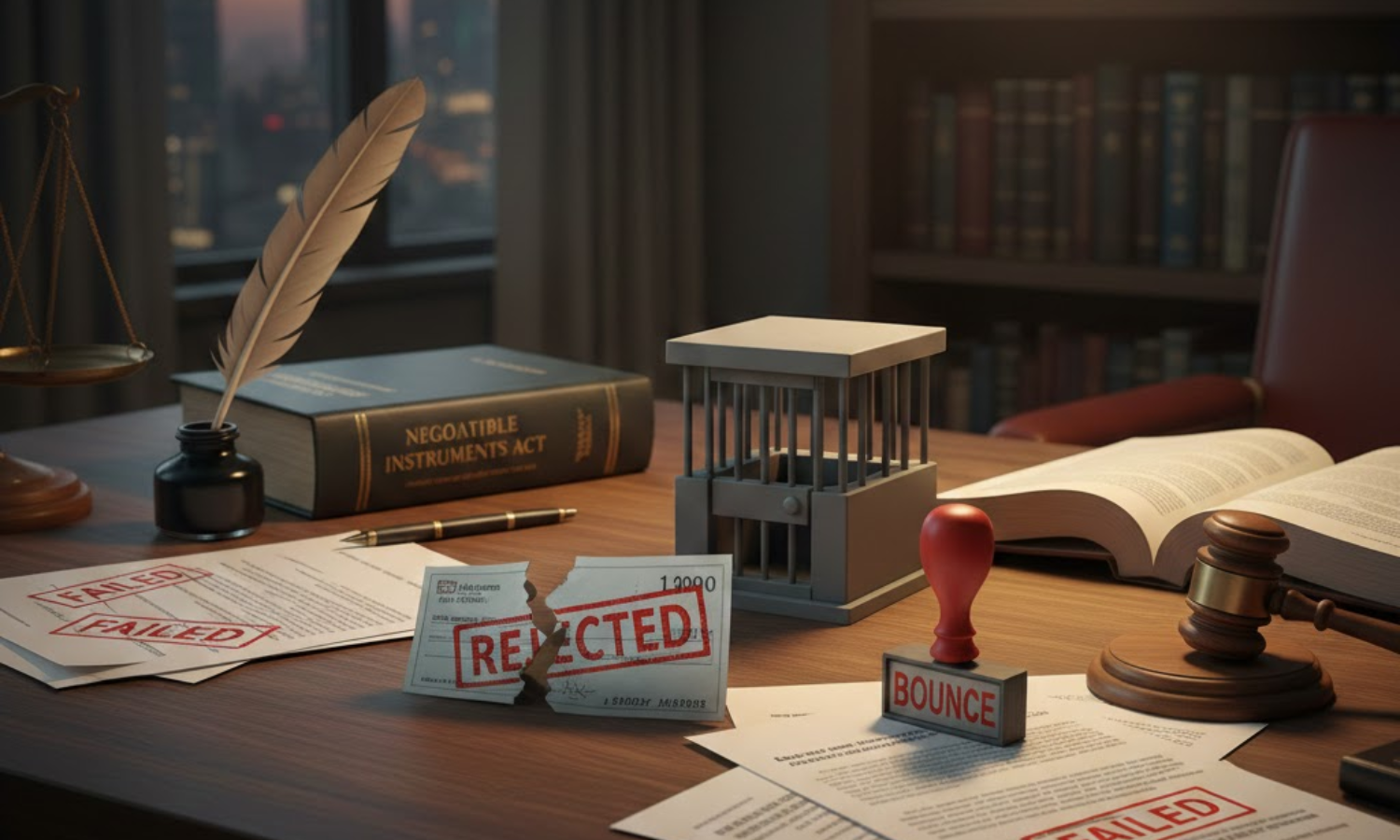
A cheque dishonour can become a serious legal and financial matter, particularly when payment remains unpaid despite repeated requests. Whether you are a business owner, individual, creditor, or a person facing a cheque bounce complaint, understanding the applicable legal process is important before taking further action. Kaushik Associates provides legal assistance in cheque bounce matters in Delhi, including legal notice, complaint filing, defence representation, settlement guidance, and court proceedings.
Cheque bounce matters are commonly addressed under Section 138 of the Negotiable Instruments Act, 1881, where the statutory requirements are satisfied. A cheque may be dishonoured for reasons such as insufficient funds or other circumstances recognized under banking and applicable law.
However, a returned cheque does not automatically mean that every legal requirement for a Section 138 case has been fulfilled. The underlying transaction, validity of the cheque, reason for dishonour, statutory notice, payment opportunity, supporting documents, and prescribed timelines can all be relevant to the matter.
This is why early legal assessment can help determine the appropriate course of action.
Our cheque bounce lawyers in Delhi assist clients at different stages of cheque dishonour disputes. Depending on the circumstances, legal assistance may include reviewing the transaction, examining the cheque and bank return memo, preparing a statutory legal notice, responding to a notice received from the opposite party, preparing a complaint, and representing the client during court proceedings.
For a person seeking recovery of unpaid dues, the case may require careful examination of the underlying liability and documentary evidence. For a person facing a complaint, the legal team may review whether the allegations and statutory requirements are properly established and identify the available legal defences.
The legal notice stage is an important part of a cheque dishonour matter. Where Section 138 proceedings are being pursued, the statutory requirements concerning notice and the opportunity to make payment must be handled carefully.
A legal professional can review the cheque details, bank return memo, underlying transaction, amount involved, communications between the parties, and relevant dates before preparing the notice.
If you have received a cheque bounce notice, it is equally important not to ignore it. The response should be based on the actual facts and documents available in the matter rather than relying on a generic reply.
When the applicable statutory requirements are satisfied and the matter proceeds towards litigation, the complainant may need to initiate proceedings before the appropriate court. Proper documentation and compliance with procedural requirements can be important at this stage.
The relevant documents may include the original cheque or applicable records, bank return memo, statutory notice, proof of service, transaction documents, invoices, agreements, account statements, communications, and other evidence supporting the underlying claim.
Kaushik Associates can assist clients in reviewing these documents and taking appropriate legal steps based on the circumstances of the case.
A person facing a cheque bounce complaint may have different factual and legal circumstances requiring individual assessment. Issues such as the nature of the underlying transaction, alleged liability, manner in which the cheque was issued, repayment or settlement, disputed signatures, security-cheque allegations, supporting communications, and other documentary evidence may become relevant depending on the case.
Our legal team assists clients in reviewing the complaint and available evidence, understanding the proceedings, preparing an appropriate defence, and representing them before the concerned court.
The appropriate defence cannot be determined solely from the fact that a cheque has been dishonoured; it depends on the complete facts and evidence of the matter.
Not every cheque bounce dispute necessarily has to continue through prolonged litigation. Depending on the circumstances and the stage of proceedings, parties may explore lawful settlement or other available remedies.
A legal professional can help assess whether settlement discussions are appropriate and ensure that any proposed resolution is properly documented. Where settlement is not suitable, the matter can proceed through the applicable legal process.
Cheque bounce disputes require attention to statutory requirements, documentation, court procedure, and important timelines. Kaushik Associates provides practical legal guidance and representation for cheque dishonour matters in Delhi.
The firm assists clients with legal notices, complaint-related proceedings, defence representation, document review, and court appearances before the appropriate courts. Each cheque bounce matter is assessed according to its individual facts, transaction history, available evidence, and procedural position.
Facing a cheque dishonour notice, payment dispute or legal proceedings under Section 138 of the Negotiable Instruments Act? Kaushik Associates provides legal assistance in cheque bounce matters, including legal notice preparation, complaint filing, defence representation and court proceedings before the appropriate courts in Delhi.
Whether you are seeking recovery of unpaid dues or defending a cheque bounce complaint, our legal team can assess your case and guide you through the applicable legal process.
Contact Kaushik Associates today to discuss your cheque bounce matter and understand the available legal remedies.
Call Now: +91 85279 82993
Office Address: Chamber No. 285 & 823, Patiala House Courts Complex, New Delhi, Delhi – 110001.
Kaushik Associates – Practical Legal Guidance. Strategic Representation.

Copyright © 2025 | Kaushik Associates | All rights reserved | Designed & Developed by – G Optimizers